

Mercari Technologies America Launches Lone Worker Device for U.S. Industrial and High-Risk Workforces

Mercari Technologies America
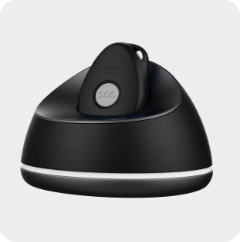
Lone Worker Safety Devices
The Mercari Lone Worker Device (LWD) is built to manually or automatically detect emergencies, and help responders locate workers in hazardous environments.
NEW YORK, NY, UNITED STATES, December 1, 2025 /EINPresswire.com/ -- As industrial, manufacturing, and high-risk employers across the United States face increased pressure to strengthen worker safety programs, Mercari Technologies America LLC has introduced a next-generation personal emergency device specifically designed for lone workers. The Mercari Lone Worker Device (LWD) is built to automatically detect emergencies, transmit critical alerts, and help responders locate workers quickly in hazardous or isolated environments.The Mercari LWD is a compact, wearable mobile emergency response unit combining cellular calling, SMS alerts, GPS, Wi-Fi, and Bluetooth-assisted location technologies. Unlike smartphone-based systems, the device does not require an internet connection or app to function. All emergency alerts are transmitted using standard cellular voice and text channels, making the device suitable for industrial environments where Wi-Fi may be inconsistent or unavailable.
The device includes a large SOS button designed to be easily pressed in high-stress situations, a two-way hands-free speakerphone, automatic fall detection, no-motion man down detection, and voice guidance that confirms activation status. It is water- and dust-resistant to IP67 standards, allowing it to be worn in rain, wet industrial areas, or during wash-down operations. The battery lasts approximately 48 to 72 hours during continuous outdoor use and can last longer indoors when paired with its base station.
The LWD’s emergency features are engineered specifically for lone-worker scenarios. The automatic fall detection system uses multidimensional sensors to measure altitude drops, angle changes, and impact force. If criteria suggest a serious fall, the device vibrates and announces that a fall alert has been activated. If the alert is not cancelled within several seconds, it sends help-me text messages and begins calling emergency contacts in sequence. This feature is designed for situations in which a worker becomes unconscious or immobilized and cannot reach the SOS button.
Man Down detection adds another safety layer for workers performing maintenance tasks, confined-space operations, remote inspections, or activities where sudden medical incidents are a concern. The device can be programmed to detect a lack of movement for a selected period, such as 2 minutes, 10 minutes, or multiple hours. If no movement is detected, the device issues warnings and then automatically triggers SMS alerts and emergency call sequences if needed.
Location reporting is a central feature of the system. Emergency contacts receive a text message that includes a Google Maps link and an indicator of the type of location signal being used. When outdoors, the device typically provides a GPS location with accuracy of approximately 2.5 yards under clear conditions. When indoors or in facilities with heavy steel, concrete, or obstruction, the device uses Wi-Fi and GSM signals to generate approximate positioning. If used near its charging base, the device sends a highly accurate Bluetooth-based location. These indicators help responders understand whether the worker is indoors, outdoors, near the base, or in an obstructed environment.
One of the strongest advantages for industrial workplaces is the Bluetooth charging base, which doubles as an indoor location beacon. GPS signals are often unreliable inside warehouses, manufacturing plants, and facilities with thick concrete or steel. To address this, the base station is preprogrammed with the facility’s GPS coordinates. When the device is within approximately 20 to 30 yards of the base, it automatically uses the base station location during emergencies. The base also includes an emergency backup battery that lasts up to eight hours during power failures, a common risk in industrial environments.
During an SOS event, the Mercari LWD follows a structured emergency sequence. After announcing activation, it sends text messages to as many as ten programmed contacts and then begins calling them in order of priority, ringing each for twenty seconds before moving to the next contact. The device continues cycling until someone answers. Workers do not need to press any buttons to answer incoming calls, which helps in cases where they are injured or unable to move.
Battery management is also designed for industrial reliability. Low-battery warnings begin at 20 percent with voice alerts and escalate at 15 percent when the device automatically texts all emergency contacts. Users and managers may also check battery levels through a simple SMS command. The device is intended to remain on at all times and is typically kept on its base station when not in use.
For employers, the Mercari LWD presents a practical solution for OSHA-sensitive environments and policies requiring monitoring of isolated workers. High-risk sectors such as manufacturing, agriculture, construction, utilities, warehousing, chemical processing, and field service can leverage the device to enhance emergency response, reduce rescue times, and strengthen compliance documentation. The ability to program multiple responders, including 911 as a last-priority option, adds flexibility across different workplace safety models.
As lone-worker protections gain national attention, the Mercari LWD offers a comprehensive, automated safety system designed to operate reliably in demanding, unpredictable U.S. industrial environments.
Sebastian Guang
Mercari Technologies Limited
+ +1 332 213 9007
email us here
Legal Disclaimer:
EIN Presswire provides this news content "as is" without warranty of any kind. We do not accept any responsibility or liability for the accuracy, content, images, videos, licenses, completeness, legality, or reliability of the information contained in this article. If you have any complaints or copyright issues related to this article, kindly contact the author above.
